The OC: No Longer Sprawling, Thank You Very Much


Via Andrew Sullivan, the table on the right shows the most compact, least sprawling large metro areas in the United States. New York is number 1, no surprise, and I’ve read enough about the “myth” of LA sprawl that I wouldn’t have been surprised to see Los Angeles on the list. But no. Los Angeles ranks 21st. Oddly enough, though, take a look at what region breaks the top ten: Orange County, aka Santa Ana/Anaheim/Irvine.
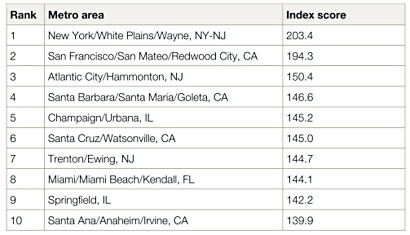
How did that happen? Orange Country is practically the dictionary definition of suburb, after all. Well, it turns out that scores are based on four factors, and Orange County does very well on three of them: development density, land use mix, and street connectivity. But I still don’t really get this. Sure, Orange County is fully developed, but almost exclusively by low-density housing and low-slung office buildings. Land use mix is probably OK, since Orange County is old enough to have turned into one of Joel Garreau’s “edge cities,” regions that provide both bedrooms and jobs. As for street accessibility, our high score must be a technicality of some kind. Sure, we have lots of four-way intersections, but outside of a few small downtown centers, no one would really consider any of Orange County walkable in the usual urban sense.

So I still don’t get it. But it doesn’t matter. The OC is now officially off limits for your mockery of sterile, suburban sprawl. We’re more compact and accessible than Chicago, Detroit, or Denver. So there. More details here.


DECEMBER IS MAKE OR BREAK

A full one-third of our annual fundraising comes in this month alone. That’s risky, because a strong December means our newsroom is on the beat and reporting at full strength—but a weak one means budget cuts and hard choices ahead.

With only days left until December 31, we've raised about half of our $400,000 goal—but we need a huge surge in reader support to close the remaining gap. Whether you've given before or this is your first time, your contribution right now matters.

Managing an independent, nonprofit newsroom is staggeringly hard. There’s no cushion in our budget—no backup revenue, no corporate safety net. We can’t afford to fall short, and we can’t rely on corporations or deep-pocketed interests to fund the fierce, investigative journalism Mother Jones exists to do. That’s why we need you right now. Please chip in to help close the gap.

DECEMBER IS MAKE OR BREAK

A full one-third of our annual fundraising comes in this month alone. That’s risky, because a strong December means our newsroom is on the beat and reporting at full strength—but a weak one means budget cuts and hard choices ahead.

With only days left until December 31, we've raised about half of our $400,000 goal—but we need a huge surge in reader support to close the remaining gap. Whether you've given before or this is your first time, your contribution right now matters.

Managing an independent, nonprofit newsroom is staggeringly hard. There’s no cushion in our budget—no backup revenue, no corporate safety net. We can’t afford to fall short, and we can’t rely on corporations or deep-pocketed interests to fund the fierce, investigative journalism Mother Jones exists to do. That’s why we need you right now. Please chip in to help close the gap.

We Recommend

Latest

Sign up for our free newsletter

Subscribe to the Mother Jones Daily to have our top stories delivered directly to your inbox.

Get our award-winning magazine

Save big on a full year of investigations, ideas, and insights.

Subscribe

Support our journalism

Help Mother Jones' reporters dig deep with a tax-deductible donation.

Donate