For Climate, Protecting Forests Is Way Better Than Planting Trees

A new paper cautions against monoculture planting as a solution.

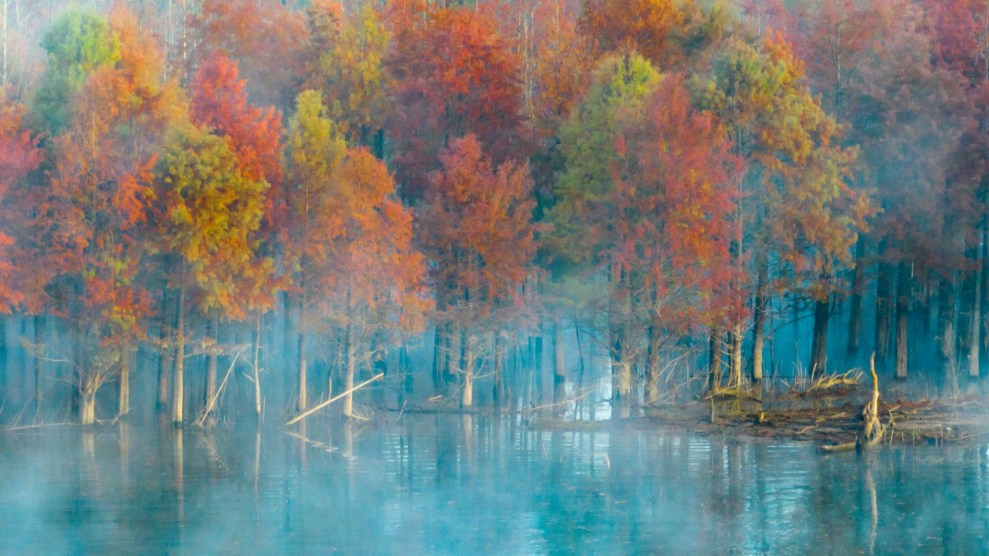
Red trees emerge from mist over a blue pond.

Fangtang Redwood Forest in Xuancheng, Anhui, ChinaCfoto/ZUMA

Get your news from a source that’s not owned and controlled by oligarchs. Sign up for the free Mother Jones Daily.

This story was originally published by the Guardian and is reproduced here as part of the Climate Desk collaboration.

Forest conservation and restoration could make a major contribution to tackling the climate crisis as long as greenhouse gas emissions are slashed, according to a study.

By allowing existing trees to grow old in healthy ecosystems and restoring degraded areas, scientists say 249 gigatons of carbon could be sequestered, equivalent to nearly 50 years of US emissions for 2022. But they caution that mass monoculture tree-planting and offsetting will not help forests realize their potential.

Humans have cleared about half of Earth’s forests and continue to destroy places such as the Amazon rainforest and the Congo basin that play crucial roles in regulating the planet’s atmosphere.

The research, published on Monday in the journal Nature as part of a collaboration between hundreds of leading forest ecologists, estimates that outside of urban agricultural areas in regions with low human footprints where forests naturally exist, they could draw down large amounts of carbon.

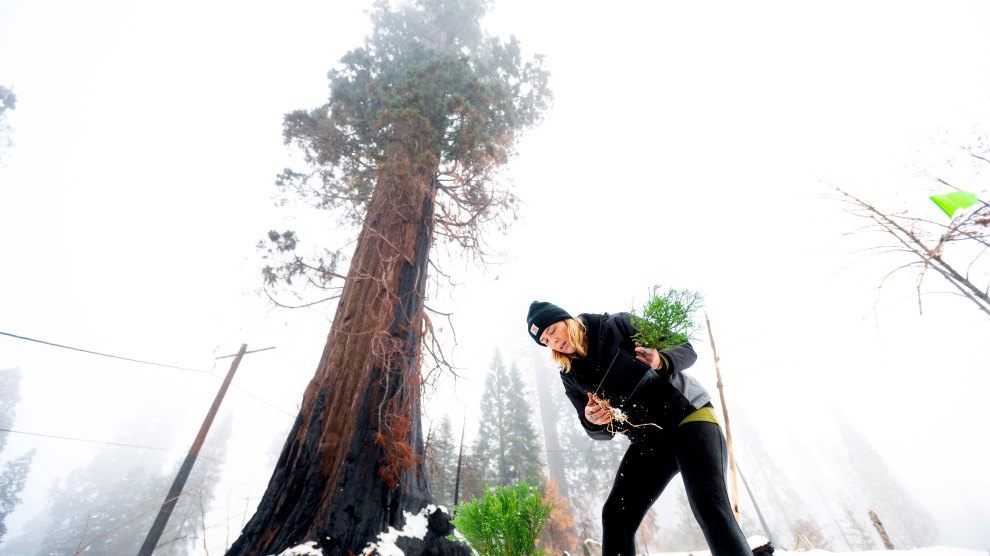
About 61 percent of the potential could be realized by protecting standing forests, allowing them to mature into old growth ecosystems like Białowieża forest in Poland and Belarus or California’s sequoia groves, which survived for thousands of years. The remaining 39 percent could be achieved by restoring fragmented forests and areas that have already been cleared.

Amid greenwashing concerns around nature’s role in climate crisis mitigation, the researchers underlined the importance of biodiversity helping forests reach their carbon drawdown potential, warning that planting huge numbers of single species would not help and urgent cuts to fossil fuel emissions were needed.

Rising numbers of forest fires and higher temperatures due to the climate crisis would be likely to reduce the potential, they said. “Most of the world’s forests are highly degraded. In fact, many people have never been in one of the few old growth forests that remain on Earth,” said Lidong Mo, a lead author of the study. “To restore global biodiversity, ending deforestation must be a top priority.”
More Mother Jones reporting on Climate Desk

BEFORE YOU CLICK AWAY!

December is make or break for us. A full one-third of our annual fundraising comes in this month alone. A strong December means our newsroom is on the beat and reporting at full strength. A weak one means budget cuts and hard choices ahead.

The December 31 deadline is closing in fast. To reach our $400,000 goal, we need readers who’ve never given before to join the ranks of MoJo donors. And we need our steadfast supporters to give again today—any amount.

Managing an independent, nonprofit newsroom is staggeringly hard. There’s no cushion in our budget—no backup revenue, no corporate safety net. We can’t afford to fall short, and we can’t rely on corporations or deep-pocketed interests to fund the fierce, investigative journalism Mother Jones exists to do.

That’s why we need you right now. Please chip in to help close the gap.

BEFORE YOU CLICK AWAY!

December is make or break for us. A full one-third of our annual fundraising comes in this month alone. A strong December means our newsroom is on the beat and reporting at full strength. A weak one means budget cuts and hard choices ahead.

The December 31 deadline is closing in fast. To reach our $400,000 goal, we need readers who’ve never given before to join the ranks of MoJo donors. And we need our steadfast supporters to give again today—any amount.

Managing an independent, nonprofit newsroom is staggeringly hard. There’s no cushion in our budget—no backup revenue, no corporate safety net. We can’t afford to fall short, and we can’t rely on corporations or deep-pocketed interests to fund the fierce, investigative journalism Mother Jones exists to do.

That’s why we need you right now. Please chip in to help close the gap.

We Recommend

Latest

Sign up for our free newsletter

Subscribe to the Mother Jones Daily to have our top stories delivered directly to your inbox.

Get our award-winning magazine

Save big on a full year of investigations, ideas, and insights.

Subscribe

Support our journalism

Help Mother Jones' reporters dig deep with a tax-deductible donation.

Donate