The Agrichemical Industry’s Business Model in One Paragraph

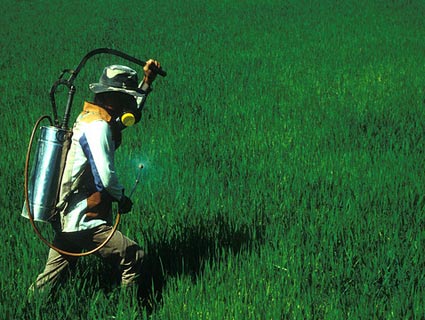
<a href="http://www.flickr.com/photos/jz909/1450513463/">jetsandzeppelins</a>/Flickr

Get your news from a source that’s not owned and controlled by oligarchs. Sign up for the free Mother Jones Daily.


I’ve been writing a lot about how the agrichemical industry leverages its failures to to sell ever more toxic herbicides, insecticides, and genetically modified crops to replace ones that have lost effectiveness, trapping farmers on an ever-accelerating pesticide/technology treadmill. In the latest major media article on the rise of “superweeds” resistant to Monsanto’s flagship herbicide, this one from Bloomberg BusinessWeek, Monsanto CEO Hugh Grant makes my point for me:

Monsanto Chief Executive Officer Hugh Grant says competitors’ efforts to develop their own herbicide-tolerant crops isn’t a threat to the company’s flagship business. Seed companies will cross-license each others’ genetics to create crops able to withstand multiple weedkillers, he says, and spraying fields with a mix of herbicides will kill the superweeds and give Roundup Ready crops new life. Monsanto itself is adding resistance to dicamba, an older weedkiller, to Roundup Ready crops for sale by 2015. “The cavalry is coming,” Grant says.

Dicamba, it should be noted, is listed by Pesticide Action Network as a “bad actor”—it’s an established developmental/reproductive toxin with the potential to contaminate groundwater. If Dicamba Ready crops become anywhere near as prolific as their Roundup Ready cousins, the result could be disastrous. Farmers are currently applying so much Roundup that US Geological Survey researchers are finding it at “significant” levels in water and air samples in farm states. Roundup enjoys a reputation as a relatively benign herbicide, but new research on its effect on both soil and human health is undermining that assumption.


DECEMBER IS MAKE OR BREAK

A full one-third of our annual fundraising comes in this month alone. That’s risky, because a strong December means our newsroom is on the beat and reporting at full strength—but a weak one means budget cuts and hard choices ahead.

The December 31 deadline is closing in fast. To reach our $400,000 goal, we need readers who’ve never given before to join the ranks of MoJo donors. And we need our steadfast supporters to give again—any amount today.

Managing an independent, nonprofit newsroom is staggeringly hard. There’s no cushion in our budget—no backup revenue, no corporate safety net. We can’t afford to fall short, and we can’t rely on corporations or deep-pocketed interests to fund the fierce, investigative journalism Mother Jones exists to do.

That’s why we need you right now. Please chip in to help close the gap.

DECEMBER IS MAKE OR BREAK

A full one-third of our annual fundraising comes in this month alone. That’s risky, because a strong December means our newsroom is on the beat and reporting at full strength—but a weak one means budget cuts and hard choices ahead.

The December 31 deadline is closing in fast. To reach our $400,000 goal, we need readers who’ve never given before to join the ranks of MoJo donors. And we need our steadfast supporters to give again—any amount today.

Managing an independent, nonprofit newsroom is staggeringly hard. There’s no cushion in our budget—no backup revenue, no corporate safety net. We can’t afford to fall short, and we can’t rely on corporations or deep-pocketed interests to fund the fierce, investigative journalism Mother Jones exists to do.

That’s why we need you right now. Please chip in to help close the gap.

We Recommend

Latest

Sign up for our free newsletter

Subscribe to the Mother Jones Daily to have our top stories delivered directly to your inbox.

Get our award-winning magazine

Save big on a full year of investigations, ideas, and insights.

Subscribe

Support our journalism

Help Mother Jones' reporters dig deep with a tax-deductible donation.

Donate