Prison Admissions Are Heading Down Faster Than Overall Incarceration

Yesterday I posted a chart showing the (slight) decline in the US incarceration rate in 2016. However, a reader points out that the prison admission rate is more interesting as an indicator of what’s happening right now, and the decline there is more impressive. Here are admissions and releases over the past three decades:
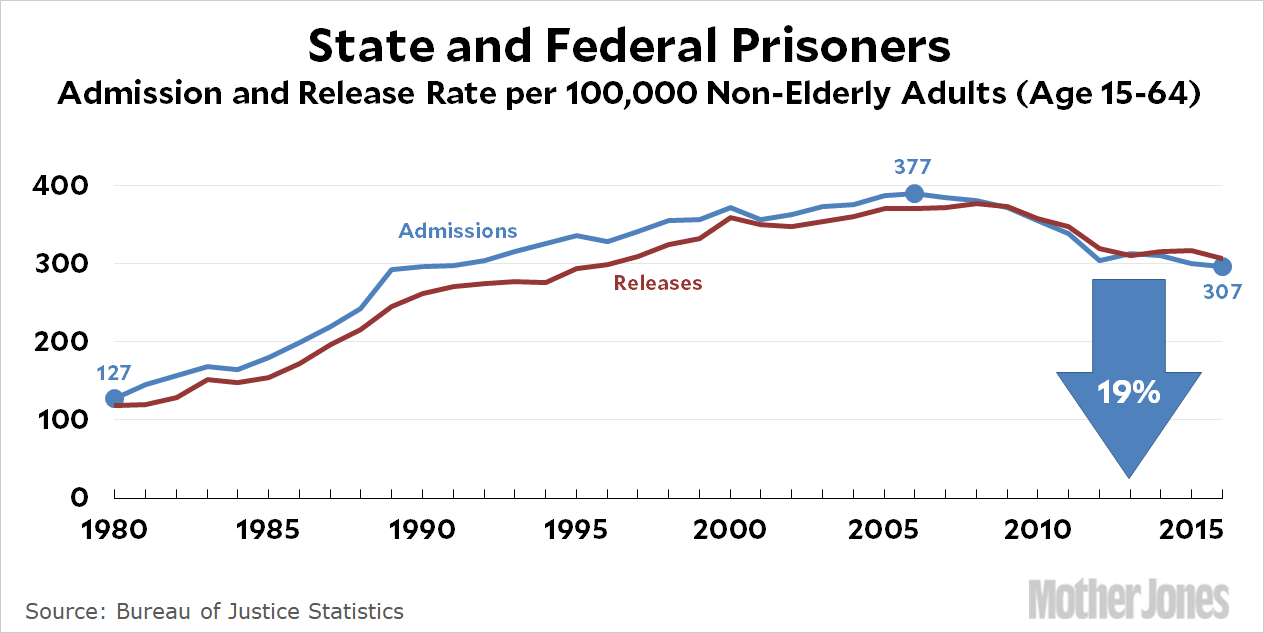
Since its peak in 2006, new prison admissions have dropped by 19 percent. When admissions fall below releases, the total prison population shrinks—something that happened in 2009 for the first time since 1980 and has continued since then. Eventually, as some of the prisoners with long sentences doled out in the 80s and 90s come up for release at the same time that new admissions continue to decline, the incarceration rate should start dropping more steeply.

If we want the overall incarceration to come down even faster, the key is not just fewer admissions, but shorter sentences. US sentences tend to be far longer than those in the rest of the world, and now that crime rates have declined to the levels of 50 years ago we can probably afford to start handing out more reasonable sentences.

POSTSCRIPT: Note that this data is for prisoners only, not local jail inmates. The average jail sentence is only a few months, so admissions rates don’t have the same meaning as they do for prisons.

POSTSCRIPT 2: As with yesterday’s chart, I calculated these rates as a share of the non-elderly population, not the entire population. This means that the exact numbers are different from the ones you’ll see in other charts—though the basic shape isn’t much different. Why do I do this? Because if you use the entire population, some of the decline in the prison numbers is simply due to the growing number of those over 65, who account for about 0 percent of the prison population. I think it’s more useful to look at incarceration rates as a percentage of the population that’s actually responsible for nearly all crime and nearly all prisoners.


THIS IS URGENT! DON’T MISS THE DEADLINE.

Until MIDNIGHT only, every dollar you give goes twice as far to support kickass reporting. This is the moment to make your support count double.

In a climate where journalists face mounting pressure to back down, stay silent, or soften their reporting, Mother Jones refuses to flinch. We’re pushing back against intimidation and delivering fierce, independent journalism that holds power accountable—no matter who’s trying to silence us.

But here’s the reality: We’re a nonprofit newsroom with zero corporate backing and no financial cushion. We depend entirely on readers like you to fund the investigations that matter most. The 2X match deadline is just hours away. We need you on the team right now. Please chip in and double your impact.

THIS IS URGENT! DON’T MISS THE DEADLINE.

Until MIDNIGHT only, every dollar you give goes twice as far to support kickass reporting. This is the moment to make your support count double.

In a climate where journalists face mounting pressure to back down, stay silent, or soften their reporting, Mother Jones refuses to flinch. We’re pushing back against intimidation and delivering fierce, independent journalism that holds power accountable—no matter who’s trying to silence us.

But here’s the reality: We’re a nonprofit newsroom with zero corporate backing and no financial cushion. We depend entirely on readers like you to fund the investigations that matter most. The 2X match deadline is just hours away. We need you on the team right now. Please chip in and double your impact.

We Recommend

Latest

Sign up for our free newsletter

Subscribe to the Mother Jones Daily to have our top stories delivered directly to your inbox.

Get our award-winning magazine

Save big on a full year of investigations, ideas, and insights.

Subscribe

Support our journalism

Help Mother Jones' reporters dig deep with a tax-deductible donation.

Donate