Since we’re all pretending to care that a freshman member of Congress has proposed a top federal income tax rate of 70 percent, I thought you might be interested in where this would place us in the world league tables. Keeping in mind that international rates include both federal and state taxes, and that VATs play a big role in personal taxation, here you go:
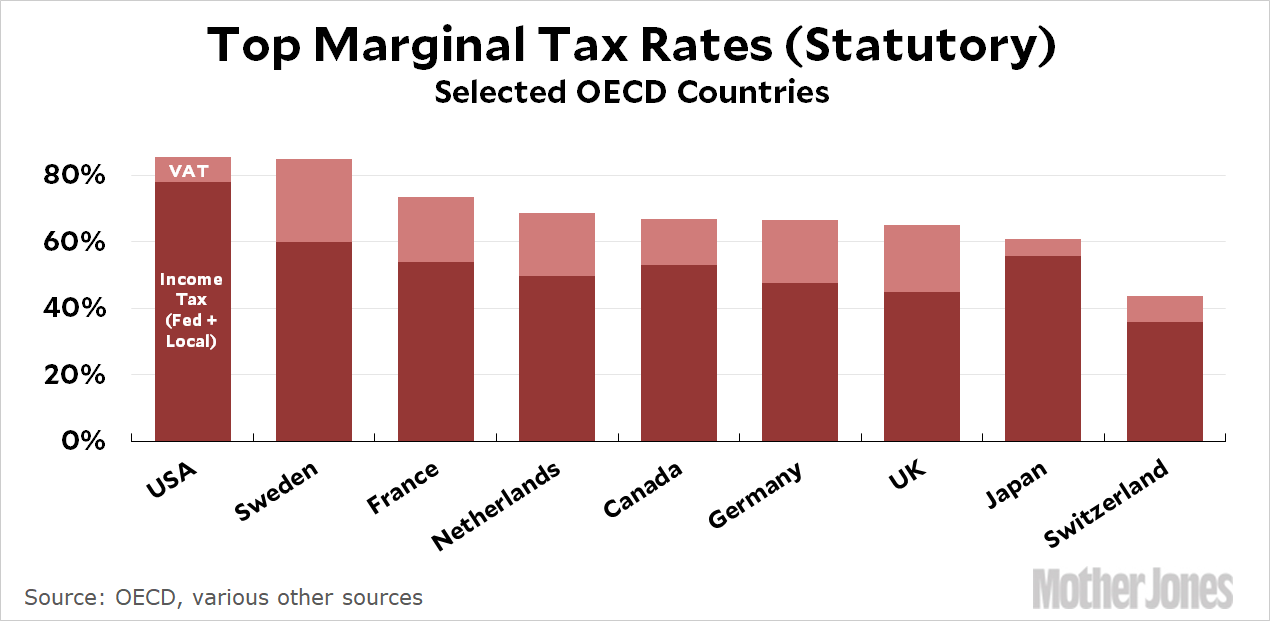
For the United States, I’ve included a 70 percent top federal rate, an 8 percent average state income tax rate, and a sales tax rate of about 7.5 percent. This would represent the statutory top tax rate for someone living in a high-tax state like California, New York, or New Jersey. Under Alexandria Ocasio-Cortez’s proposal, we would have the highest top rate in the world.

Now, the actual effective top tax rate depends a lot on the details of exemptions, deductions, loopholes, income limits, and so on. In real life, that makes all these rates substantially lower than the statutory rate. Without details and more sophisticated analysis, it’s impossible to say where the US would fit in.

So do I support a 70 percent top rate? Of course not. I support certain programs that require certain spending levels. Once we’ve figured that out, then I support a tax system that can fund our spending. This might end up including a top marginal rate of 70 percent or it might not. Until I know what the money is going to be spent on, I’m agnostic on the details of tax rates.¹

¹Although I’ll confess to a personal reluctance to support an all-in tax rate greater than 50 percent. That’s real-life taxation, not statutory rates, and it’s total taxation, not top marginal rates. I don’t base this on anything to do with economic efficiency, just that it seems unfair to have to turn over more than half your income to Uncle Sam. But I might make exceptions at the very highest income levels.

DECEMBER IS MAKE OR BREAK

A full one-third of our annual fundraising comes in this month alone. That’s risky, because a strong December means our newsroom is on the beat and reporting at full strength—but a weak one means budget cuts and hard choices ahead.

With only days left until December 31, we've raised about half of our $400,000 goal—but we need a huge surge in reader support to close the remaining gap. Whether you've given before or this is your first time, your contribution right now matters.

Managing an independent, nonprofit newsroom is staggeringly hard. There’s no cushion in our budget—no backup revenue, no corporate safety net. We can’t afford to fall short, and we can’t rely on corporations or deep-pocketed interests to fund the fierce, investigative journalism Mother Jones exists to do. That’s why we need you right now. Please chip in to help close the gap.

DECEMBER IS MAKE OR BREAK

A full one-third of our annual fundraising comes in this month alone. That’s risky, because a strong December means our newsroom is on the beat and reporting at full strength—but a weak one means budget cuts and hard choices ahead.

With only days left until December 31, we've raised about half of our $400,000 goal—but we need a huge surge in reader support to close the remaining gap. Whether you've given before or this is your first time, your contribution right now matters.

Managing an independent, nonprofit newsroom is staggeringly hard. There’s no cushion in our budget—no backup revenue, no corporate safety net. We can’t afford to fall short, and we can’t rely on corporations or deep-pocketed interests to fund the fierce, investigative journalism Mother Jones exists to do. That’s why we need you right now. Please chip in to help close the gap.

We Recommend

Latest

Sign up for our free newsletter

Subscribe to the Mother Jones Daily to have our top stories delivered directly to your inbox.

Get our award-winning magazine

Save big on a full year of investigations, ideas, and insights.

Subscribe

Support our journalism

Help Mother Jones' reporters dig deep with a tax-deductible donation.

Donate