A Recession Warning Has Gotten Even More Recession-y

The Wall Street Journal suggests that everyone’s favorite recession indicator is probably wrong:

The market’s most-popular recession warning is flashing red again as fears about the economic impact of China’s coronavirus outbreak prompt a big drop in Treasury yields. Yet the warning—a drop in the 10-year Treasury yield below the three-month bill, known as an inverted yield curve—is signaling something much more benign: the expectation of Federal Reserve support later this year.

Well, that’s that. Whenever people finally become indifferent to some particular economic warning, that’s a strong sign that we’re about to get bitten in the ass. Here’s what the yield curve looks like:
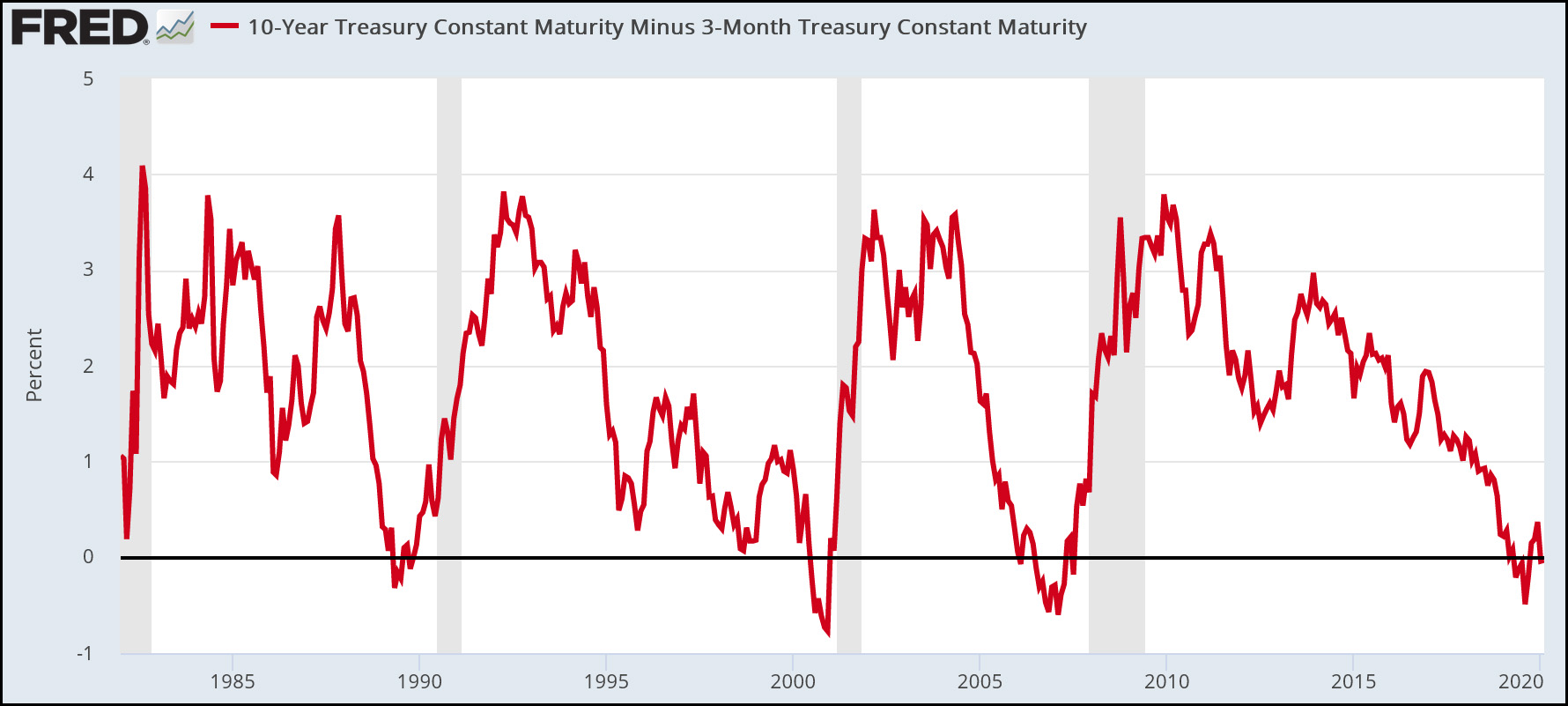
When financial reporters talk about inverted yield curves, they always mention the bright side: although inversions do seem to predict recessions, it can take as much as a year before the recession comes. Unfortunately, as you can see, the yield curve actually dropped below zero last summer and has been near zero ever since. If it drops again, it’s probably best to treat the entire period as a single episode, which means we’ll get another recession by mid-2020.

Or not. I mean, the yield curve is sort of a mysterious thing, and it “always” predicts a recession until it doesn’t. On the other hand, there’s a brand of economic analysis that looks at everything in terms of “oh, this thing that looks like bad news is actually good news because it will force the Fed to loosen up monetary policy.” I’m not fond of it. The Journal plays this card today with a subhead that literally says things are “different this time.”

Maybe so! I sure don’t know. But I’ll be resting a little uneasy for the next few months.
DECEMBER IS MAKE OR BREAK

A full one-third of our annual fundraising comes in this month alone. That’s risky, because a strong December means our newsroom is on the beat and reporting at full strength—but a weak one means budget cuts and hard choices ahead.

With only days left until December 31, we've raised about half of our $400,000 goal—but we need a huge surge in reader support to close the remaining gap. Whether you've given before or this is your first time, your contribution right now matters.

Managing an independent, nonprofit newsroom is staggeringly hard. There’s no cushion in our budget—no backup revenue, no corporate safety net. We can’t afford to fall short, and we can’t rely on corporations or deep-pocketed interests to fund the fierce, investigative journalism Mother Jones exists to do. That’s why we need you right now. Please chip in to help close the gap.

DECEMBER IS MAKE OR BREAK

A full one-third of our annual fundraising comes in this month alone. That’s risky, because a strong December means our newsroom is on the beat and reporting at full strength—but a weak one means budget cuts and hard choices ahead.

With only days left until December 31, we've raised about half of our $400,000 goal—but we need a huge surge in reader support to close the remaining gap. Whether you've given before or this is your first time, your contribution right now matters.

Managing an independent, nonprofit newsroom is staggeringly hard. There’s no cushion in our budget—no backup revenue, no corporate safety net. We can’t afford to fall short, and we can’t rely on corporations or deep-pocketed interests to fund the fierce, investigative journalism Mother Jones exists to do. That’s why we need you right now. Please chip in to help close the gap.

We Recommend

Latest

Sign up for our free newsletter

Subscribe to the Mother Jones Daily to have our top stories delivered directly to your inbox.

Get our award-winning magazine

Save big on a full year of investigations, ideas, and insights.

Subscribe

Support our journalism

Help Mother Jones' reporters dig deep with a tax-deductible donation.

Donate