What Combination of Interventions Is Most Effective for a Pandemic?

A team of researchers led by a group from Oxford University has published an interesting new study about the effectiveness of various interventions in the fight against COVID-19. Here are their basic results:
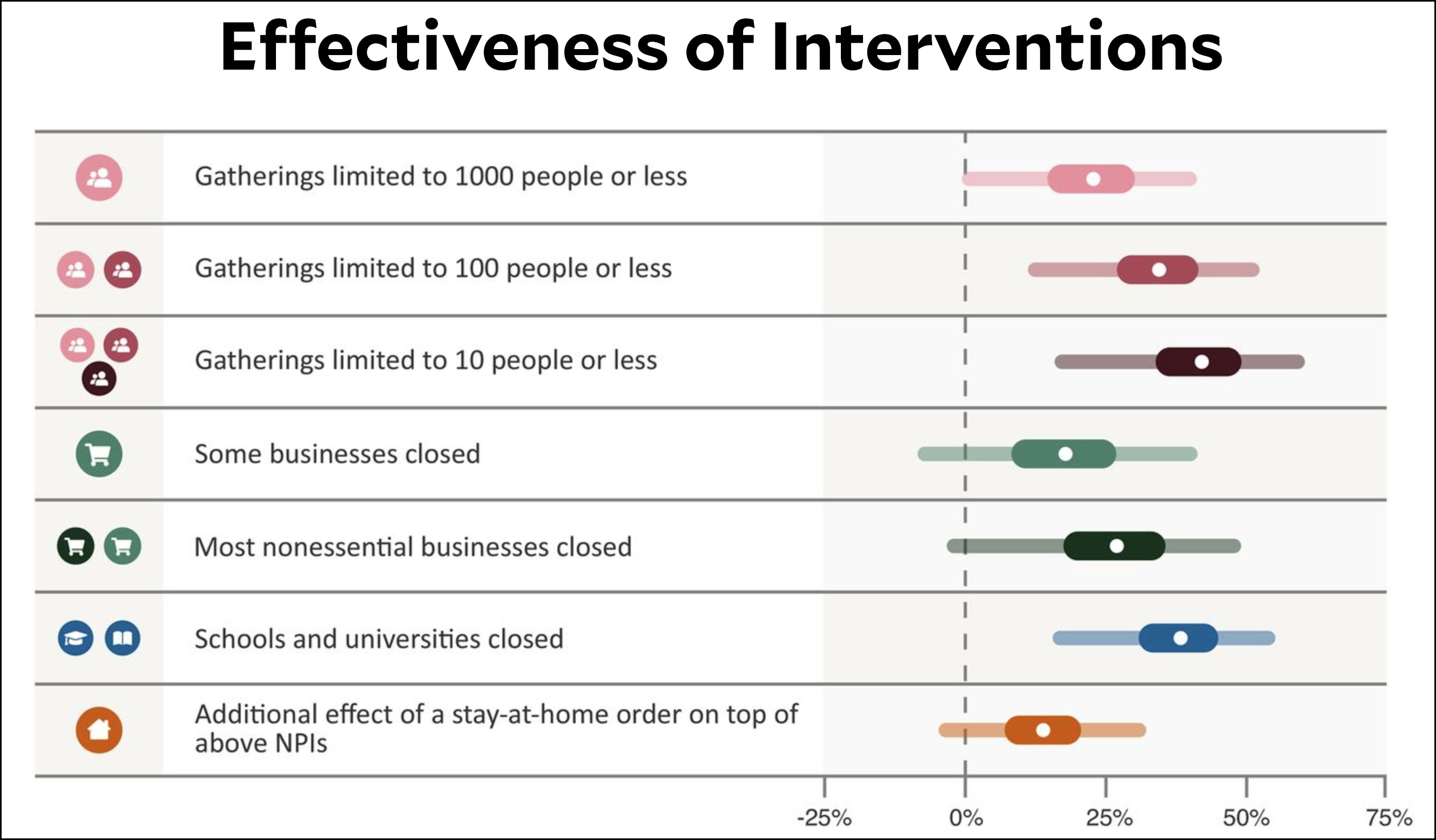
Unlike some previous studies, this one finds that closing schools and universities can be quite effective—along with very strict limits on gatherings. Stay-at-home orders, conversely, have very little effect.

Unfortunately, the study methodology was unable to distinguish between different kinds of school closure (elementary vs. high school vs. university), which severely limits its usefulness. Existing research already suggests that there may be a big difference between opening primary schools vs., say, opening high schools, where kids are far more likely to break quarantine and become infected. Nor does this study account for the impact that school closures have on learning for young children, which is already thought to be considerable. It’s strictly about the overall impact on disease transmission.

This is a big drawback. At the same time, if you simply accept this study as one more data point among many, it has some value. For one thing, the authors are able to estimate the effectiveness of multiple interventions:
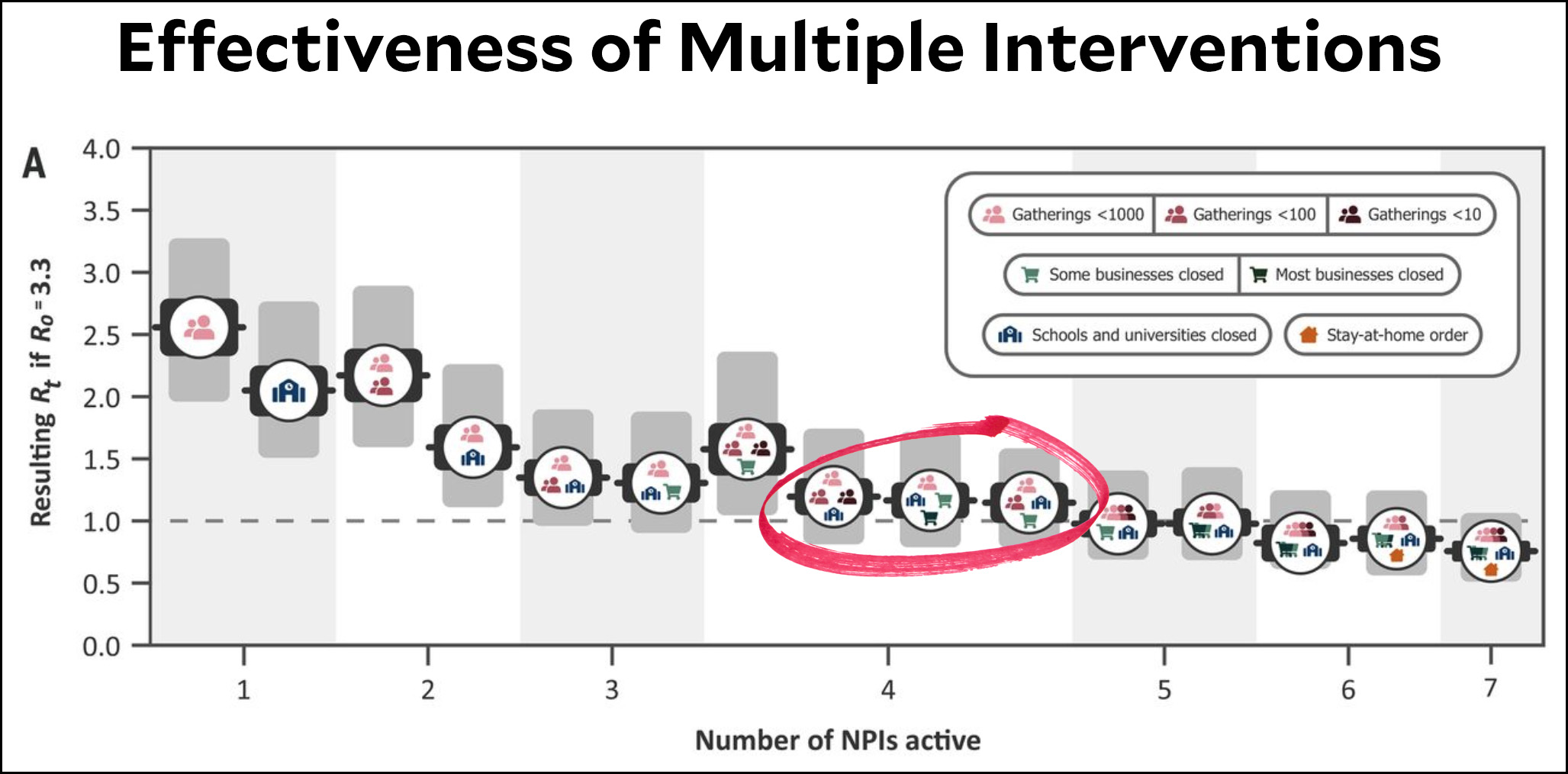
This has a chance of being useful to policymakers. Take a look at the three interventions that I’ve circled. All three include a ban on gatherings of over a thousand people plus a shutdown of schools. Option 1 adds a ban on gatherings over ten people. Option 2 closes nearly all businesses. Option 3 bans gatherings over 100 people and closes some businesses. All three are predicted to have about the same effect. Which do you choose?

Obviously I’m oversimplifying here, especially since this is just one study among many. But this is the kind of information we need in order to deal with future pandemics most effectively. After all, you didn’t think that COVID-19 would be the last pandemic ever, did you?

YOUR GIFT DOUBLES THROUGH FRIDAY

Right now, every dollar you give goes twice as far—but only until Friday’s midnight deadline. This is the moment to make your support count double.

In a climate where journalists face mounting pressure to back down, stay silent, or soften their reporting, Mother Jones refuses to flinch. We’re pushing back against intimidation and delivering fierce, independent journalism that holds power accountable—no matter who’s trying to silence us.

But here’s the reality: We’re a nonprofit newsroom with zero corporate backing and no financial cushion. We depend entirely on readers like you to fund the investigations that matter most.

Friday’s 2X match deadline is coming soon. We need you on the team right now. Please chip in and double your impact.

YOUR GIFT DOUBLES THROUGH FRIDAY

Right now, every dollar you give goes twice as far—but only until Friday’s midnight deadline. This is the moment to make your support count double.

In a climate where journalists face mounting pressure to back down, stay silent, or soften their reporting, Mother Jones refuses to flinch. We’re pushing back against intimidation and delivering fierce, independent journalism that holds power accountable—no matter who’s trying to silence us.

But here’s the reality: We’re a nonprofit newsroom with zero corporate backing and no financial cushion. We depend entirely on readers like you to fund the investigations that matter most.

Friday’s 2X match deadline is coming soon. We need you on the team right now. Please chip in and double your impact.

We Recommend

Latest

Sign up for our free newsletter

Subscribe to the Mother Jones Daily to have our top stories delivered directly to your inbox.

Get our award-winning magazine

Save big on a full year of investigations, ideas, and insights.

Subscribe

Support our journalism

Help Mother Jones' reporters dig deep with a tax-deductible donation.

Donate