
People Addicted to Opioids Are Nine Times More Likely to Have Hepatitis C

And many other illnesses, too.

Get your news from a source that’s not owned and controlled by oligarchs. Sign up for the free Mother Jones Daily.

Americans diagnosed with opioid addiction are far more likely to suffer from a host of other health conditions, from hepatitis C to alcoholism to back pain. That’s according to a new report from Amino, a health tech company that matches patients with doctors. The company examined insurance claims of more than 300 million patients with private heath insurance between 2014 and 2016, and compared the diagnoses of those with opioid use disorder to the general population.
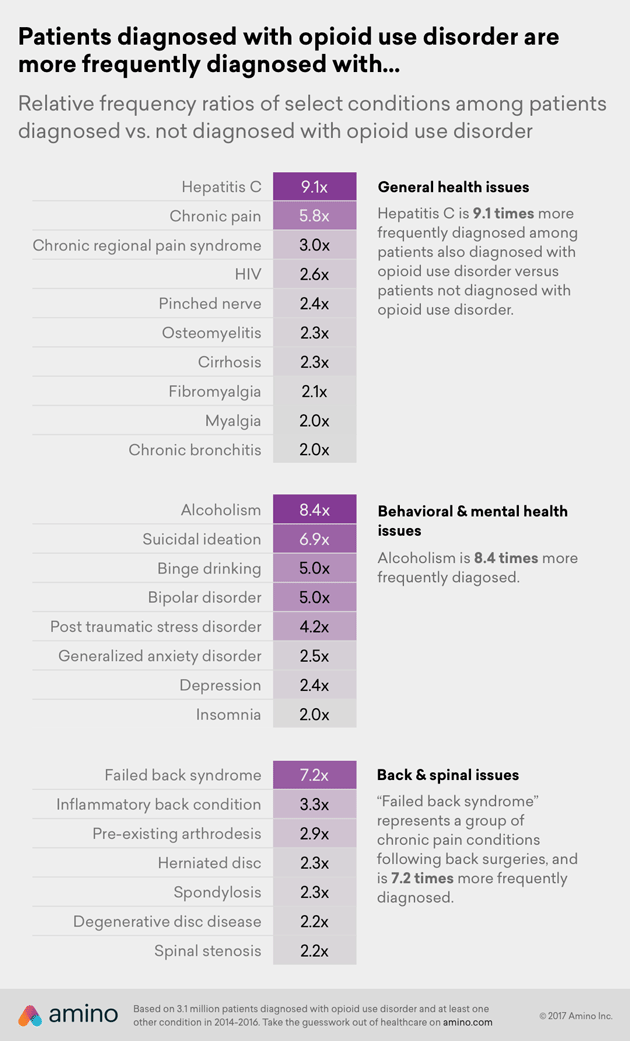
As the chart above shows, addiction to opioids—including painkillers, heroin, or fentanyl—is seldom the only mental or behavioral health issue at hand: Those with opioid use disorder are 8.4 times more likely to suffer from alcoholism, 6.9 times more likely to experience suicidal ideation, and 4.2 times more likely to have post traumatic stress disorder, compared to the general population. 

The study didn’t examine whether opioid addiction was caused by, or caused, the other diagnoses. But some of the conditions, like hepatitis C, are often a result of the needle sharing that can come with opioid use. As more and more Americans inject opioids—particularly heroin—hepatitis C rates have soared: The number of new infections tripled between 2010 and 2015, according to a recent report form the Centers for Disease Control and Prevention. 

Other diagnoses, like chronic pain and “failed back syndrome,”  or pain after back surgery, could be the reason the patients got started taking opioids to begin with. For years, opioid painkillers were aggressively (and sometimes illegally) marketed and liberally prescribed to those with chronic pain, but there’s scant evidence that the painkillers work when prescribed for long periods of time. According to the CDC opioid prescribing guidelines released last spring, opioids should be prescribed for chronic pain only after other solutions, like acetaminophen (Tylenol) or physical therapy, have been considered. 

YOUR GIFT DOUBLES THROUGH FRIDAY

Right now, every dollar you give goes twice as far—but only until Friday’s midnight deadline. This is the moment to make your support count double.

In a climate where journalists face mounting pressure to back down, stay silent, or soften their reporting, Mother Jones refuses to flinch. We’re pushing back against intimidation and delivering fierce, independent journalism that holds power accountable—no matter who’s trying to silence us.

But here’s the reality: We’re a nonprofit newsroom with zero corporate backing and no financial cushion. We depend entirely on readers like you to fund the investigations that matter most.

Friday’s 2X match deadline is coming soon. We need you on the team right now. Please chip in and double your impact.

YOUR GIFT DOUBLES THROUGH FRIDAY

Right now, every dollar you give goes twice as far—but only until Friday’s midnight deadline. This is the moment to make your support count double.

In a climate where journalists face mounting pressure to back down, stay silent, or soften their reporting, Mother Jones refuses to flinch. We’re pushing back against intimidation and delivering fierce, independent journalism that holds power accountable—no matter who’s trying to silence us.

But here’s the reality: We’re a nonprofit newsroom with zero corporate backing and no financial cushion. We depend entirely on readers like you to fund the investigations that matter most.

Friday’s 2X match deadline is coming soon. We need you on the team right now. Please chip in and double your impact.

We Recommend

Latest

Sign up for our free newsletter

Subscribe to the Mother Jones Daily to have our top stories delivered directly to your inbox.

Get our award-winning magazine

Save big on a full year of investigations, ideas, and insights.

Subscribe

Support our journalism

Help Mother Jones' reporters dig deep with a tax-deductible donation.

Donate